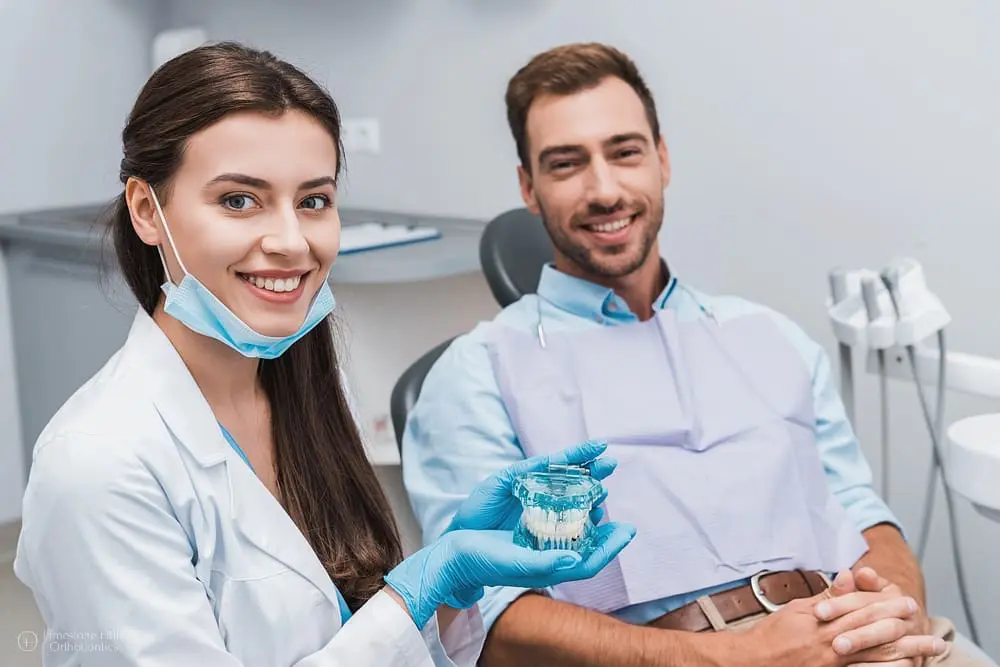
An orthodontist is a dental specialist who focuses on aligning teeth and jaws to create healthier, straighter smiles. Using tools like braces and clear aligners, they gently reposition teeth and correct bite issues. Whether it’s crooked teeth, gaps, or jaw misalignment, orthodontists are trained to tackle these problems with tailored treatment plans. Over time, they help patients achieve smiles that look great and function properly.
So, if you’re wondering “what does an orthodontist do?” it’s all about crafting that confident, picture-perfect grin while ensuring your oral health stays in top shape!

What Do Orthodontists Specialize In?
Orthodontists concentrate on diagnosing and fixing problems involving tooth alignment and jaw positioning. By doing so, they help patients resolve issues that interfere with daily activities like eating, speaking, and smiling. Their work also improves oral hygiene by making teeth easier to clean.
Common Issues Orthodontists Treat
Orthodontists solve a variety of problems, including:
- Crooked or crowded teeth: This happens when teeth overlap or grow too close together.
- Gaps between teeth: Spaces between teeth can impact appearance and make gums more prone to problems.
- Bite issues: Common bite problems include:
- Overbites: Upper teeth extend too far over the bottom teeth.
- Underbites: Lower teeth protrude past the upper teeth.
- Crossbites: Teeth don’t line up properly when the jaw is closed.
- Open bites: Some teeth don’t meet at all, even when the jaw is closed.
Unlike general dentists, orthodontists zero in on straightening teeth and fixing bite issues. This focus allows them to create smiles that are not only beautiful but also functional.
Why Do Patients See an Orthodontist?
Patients visit orthodontists for two main reasons:
- To improve dental health: Misaligned teeth can cause jaw pain, uneven tooth wear, and make teeth harder to clean, leading to cavities and gum issues.
- To enhance appearance: A straighter smile boosts confidence and self-esteem, making orthodontic care an investment in both health and happiness.
With individualized treatment, orthodontists ensure each patient’s unique needs are met.
How Are Orthodontists Trained?
Orthodontists undergo years of advanced training to develop their expertise. Here’s the process:
1. Dental School
Orthodontists start by completing a four-year program in dental school, where they learn the basics of dentistry.
2. Orthodontic Residency
After earning a dental degree, orthodontists spend an additional 2–3 years in a residency program. During this time, they focus exclusively on:
- Bite correction for issues like overbites, underbites, and crossbites.
- Jaw growth and development, particularly in children.
- Using technology such as 3D dental scans and digital X-rays to diagnose problems and plan treatments.
These extra years of training prepare orthodontists to handle both simple and complex cases with precision.
How Do Orthodontists Diagnose Problems?
Orthodontic care begins with a thorough assessment. During a consultation, orthodontists evaluate the patient’s teeth, jaw, and overall oral health. Typically, they:
- Examine the teeth visually to spot alignment issues such as gaps, crowding, or bite problems.
- Use digital scans or X-rays to get a deeper understanding of how teeth and jawbones align.
- Discuss patient concerns and goals for treatment.
Using this information, orthodontists build a personalized treatment plan that outlines the tools and techniques needed to achieve the best results.

What Treatments Do Orthodontists Provide?
Orthodontists offer a range of treatments to align teeth and jaws. Some of the most common include:
1. Braces
Traditional braces use metal brackets and wires to shift teeth into place over time. They are highly effective for correcting even severe alignment issues.
- Best for: Crooked teeth, crowded teeth, and bite problems.
- Treatment time: Typically 18–24 months.
2. Clear Aligners
Clear aligners, such as Invisalign, are a popular alternative to braces. These removable trays are custom-made for each patient and gradually shift teeth into place. Aligners are nearly invisible, making them a favorite option for teens and adults.
- Best for: Mild to moderate alignment issues.
- Treatment time: 6–18 months, depending on complexity.
3. Palatal Expanders
For growing children with narrow upper jaws, palatal expanders are used to create more space for teeth and improve bite alignment.
- Best for: Young patients with developing jaws and crowded teeth.
4. Tooth Extractions
When overcrowding is severe, orthodontists sometimes remove teeth to make room for proper alignment.
5. Retainers
After braces or aligners, patients wear retainers to hold teeth in their new positions. Wearing a retainer is essential to maintaining the results of treatment.
Benefits of Orthodontic Treatment?
Correcting alignment and bite problems provides several benefits beyond just a nicer smile:
- Healthier Teeth and Gums
Straight teeth are easier to clean, which reduces the risk of tooth decay and gum disease. - Improved Bite Function
Proper jaw alignment makes it easier to chew and speak clearly. - Increased Confidence
A straight smile boosts self-esteem, making it easier to face social and professional situations with confidence. - Prevention of Future Problems
Treating alignment issues early can prevent tooth wear, jaw pain, and expensive restorative treatments farther down the road.
When Should I See an Orthodontist?
It’s time to see an orthodontist if you notice:
- Crooked, crowded, or spaced teeth.
- Difficulty chewing or jaw pain.
- Bite issues, like an overbite or underbite.
For children, a first orthodontic checkup is recommended by age 7. Early detection allows orthodontists to guide jaw growth and prevent more severe problems later. Adults can also benefit from orthodontic care—modern treatments are effective at any age.
Orthodontists vs. General Dentists
While both support oral health, their areas of focus differ:
- General Dentists: Perform cleanings, fill cavities, and handle day-to-day dental needs.
- Orthodontists: Focus on straightening teeth and fixing misaligned jaws.
Often, dentists and orthodontists work together. For example, a dentist might refer you to an orthodontist, while orthodontists encourage regular cleanings with a dentist during treatment.
Why Choose Our Austin, TX Orthodontic Practice?
At our Austin orthodontic office, we’re dedicated to providing top-quality, personalized care to every patient. Here’s why families trust us with their orthodontic needs:
Expert Orthodontic Care
Our skilled orthodontists have years of experience treating children and teens with jaw alignment issues. We specialize in effective solutions like reverse pull headgear to help patients achieve great results.
Customized Treatment Plans
We understand that every smile is unique. That’s why we design personalized treatment plans tailored to meet your child’s specific needs and goals.
Comprehensive Support Throughout Treatment
From your first consultation to the final results, our friendly team will be with you every step of the way—answering questions, making adjustments, and offering expert advice.
Wide Range of Treatment Options
Along with reverse pull headgear, we offer a variety of options, including Invisalign and traditional braces, ensuring we have the right solution for every patient.
Book Your Free Consultation Today!
Visit our Austin, TX office for a free consultation! We’ll assess your teeth, review treatment options, and discuss how we can help you achieve a straighter, more confident smile. Scheduling is easy—just give us a call or visit our website to choose a time that works best for you. Our team is excited to help guide you on your journey to a beautiful smile!
About the Authors
Dr. Rodrigo Viecilli – Orthodontist in Austin, TX
Frequently Asked Questions
What does an orthodontist do differently than a dentist?
While dentists address general oral health, orthodontists specialize in correcting the alignment of teeth and jaws. They use braces, aligners, and other tools to straighten teeth and improve bite function.
When should kids see an orthodontist?
By age 7, children should have their first orthodontic checkup. This allows orthodontists to spot any emerging alignment issues and determine if early intervention is needed.
Is orthodontic care worth it for adults?
Yes! Adults can achieve great results with braces, clear aligners, or other treatments. It’s never too late to enjoy the benefits of straight teeth and a healthy bite.