
Mouth Breathing Treatment in Austin

Chronic mouth breathing in a growing child is a structural problem, not a habit. The lips are not sealing because something has made nasal breathing harder than oral breathing: enlarged adenoids or tonsils, allergic rhinitis, a deviated septum, or a narrow upper jaw that constricts the nasal floor. Limestone Hills screens the airway anatomy on the free 3D CBCT scan, names the structural cause, coordinates with ENT and allergy when those specialties are needed, and uses palatal expansion when the maxillary anatomy is the contributor.

  • PhD Orthodontist
  • 4.9★ 220+ Reviews
  • Mon-Sun 7:30 AM - 10:30 PM
  • Ages 7 & Up
*For new patients only. Patients in treatment $150, deductible from comprehensive treatment fee.
Women represent the need for Mouth Breathing Treatment for Limestone Hills Orthodontics in Austin, TX.
Home / Problems / Mouth Breathing

Why Mouth Breathing Matters

Chronic mouth breathing during the active growth window (roughly age 4 through age 13) measurably alters facial development. The mechanism is mechanical: the tongue normally rests against the palate during nasal breathing, providing the lateral pressure that drives transverse maxillary growth.

When the mouth is held open during sleep and rest, the tongue drops to the floor of the mouth and that growth signal disappears. The upper jaw fails to widen on schedule, the lower jaw rotates downward and backward, and the long-face phenotype begins to emerge.

The findings are visible by age 8 to 10 in untreated cases: a narrow V-shaped upper arch with crowding, a high vaulted palate, increased lower face height, decreased lip seal at rest, dark circles under the eyes from disrupted sleep, and an open-mouth posture that does not relax even when the child is told to close the lips.

None of these findings are cosmetic concerns alone; each represents a downstream consequence of years of altered breathing pattern. Treating the structural cause early is the cheapest intervention by a wide margin.

Signs Your Child May Be a Mouth Breather

Open-Mouth Posture

Lips apart when not talking or eating. The most visible sign.

Snoring or Noisy Sleep

Any snoring in a child is abnormal. It indicates airway obstruction.

Dry Lips and Mouth

Cracked lips, frequent water requests at night, morning dry mouth.

Daytime Fatigue

Tired despite adequate sleep. Difficulty concentrating. Often mistaken for ADHD.

Long, Narrow Face

Face grows vertically instead of horizontally: recessed chin, flat cheekbones (adenoid facies).

Dark Circles Under Eyes

“Allergic shiners” caused by venous congestion from chronic nasal obstruction.

The Vicious Cycle: Mouth Breathing → Narrow Palate → More Mouth Breathing

Mouth breathing produces its own self-reinforcing loop:

Open-mouth posture during sleep drops the tongue to the floor of the mouth.
Tongue pressure on the palate disappears, removing the lateral force that drives transverse maxillary growth.
The upper jaw narrows over months and years, which constricts the floor of the nasal cavity (the roof of the mouth IS the floor of the nose).
Nasal airflow becomes harder, making oral breathing the path of least resistance even after the original obstruction is gone.
The cycle continues until the anatomy is treated structurally.

None of those three is sufficient on its own; the practice’s role is to coordinate the orthodontic intervention alongside the ENT and allergy work that addresses the upstream cause.

Airway Screening at Every New-Patient Consultation

Limestone Hills includes a 3D CBCT scan and an airway assessment with every free consultation, not just the cases where parents already know there is a problem. The scan shows whether the upper airway has the volume and shape needed for normal nasal breathing during sleep.

When the screening points to a non-orthodontic cause, Dr. Viecilli refers the family to an ENT, a sleep-medicine physician, or a myofunctional therapist and stays in the loop on the care plan.

How Limestone Hills Treats the Structural Causes

1

CBCT Airway Assessment (Free at Consultation)

Dr. Viecilli uses CBCT 3D imaging to measure airway volume, nasal passage width, adenoid size, and palatal dimensions. You see the scan on-screen and understand the diagnosis.

2

ENT Coordination (If Needed)

If the scan shows enlarged adenoids or significant tonsillar hypertrophy, Dr. Viecilli refers to an ENT. Many children benefit from a combined approach: ENT treatment first, then expansion.

3

Palatal Expansion

Palatal expansion widens the upper jaw, simultaneously creating room for crowded teeth and widening the nasal floor. For children ages 7–12: RPE. For teens and adults: MARPE (mini-screw assisted expansion). Dr. Viecilli performs MARPE in-house.

4

Orthodontic Treatment (If Needed)

After expansion, braces or aligners may align teeth and correct the bite. SmartArch wire reduces alignment time by approximately 50%.

5

Myofunctional Therapy (When Indicated)

If the habit persists after structural correction, exercises retrain tongue posture, lip seal, and nasal breathing patterns. Dr. Viecilli can refer to a certified myofunctional therapist.

What Chronic Mouth Breathing Changes in a Growing Child

The structural and functional consequences of untreated chronic mouth breathing in a growing child:

Skeletal: long-face growth pattern, narrow V-shaped upper arch, posterior crossbite, anterior open bite, retruded mandible.
Dental: crowding (the dentition outgrowing the narrowed arches), increased caries risk (saliva-deprived oral mucosa is less buffered), gingivitis on anterior teeth from chronic dryness.
Functional: sleep-disordered breathing in a subset of cases, daytime fatigue and attention issues, recurrent sinus infections from stagnant nasal airflow, halitosis from dry-mouth bacterial overgrowth.
Postural: forward head posture (a compensation that opens the airway), rounded shoulders, and neck-and-shoulder muscle tension that often presents in adolescence as tension headaches.

Adult-presenting mouth breathing carries the same downstream consequences but the structural changes are no longer reversible without orthognathic surgery. Catching the pattern in the active growth window is the highest-leverage intervention in pediatric orthodontics because the same skeletal change costs an order of magnitude more to correct after age 18.

How Limestone Hills Approaches Airway-Focused Treatment

Limestone Hills approaches every mouth-breathing case with a coordinated multi-specialty plan rather than an orthodontics-only fix:

Free 3D CBCT scan and clinical airway exam at the consultation. The CBCT measures the nasopharyngeal airway in three dimensions and visualizes adenoid and tonsillar tissue, palatal narrowing, septal deviation, and turbinate hypertrophy. The clinical exam documents lip seal, tongue rest position, and the structural findings (narrow arch, high palate, long face) listed above.
ENT and allergy referral when the imaging or exam suggest the airway obstruction has a treatable component the orthodontist cannot address. Adenoids and tonsils, septal deviation, and chronic rhinitis are routinely co-managed with partner specialists. The orthodontic intervention is sequenced to follow the upstream airway work where appropriate so the structural correction has a chance to stick.
Palatal expansion when the upper arch is the contributor. Expansion in a 7-to-12-year-old widens the maxilla skeletally, which simultaneously widens the floor of the nasal cavity and improves nasal airflow. Many mouth-breathing children become spontaneous nasal breathers within weeks of expansion completion. MARPE (miniscrew-assisted) accomplishes the same in adolescents and adults whose suture has begun fusing.
Myofunctional therapy for the habit component. Once the structural cause is addressed, the open-mouth posture and tongue-rest pattern still need to be retrained. Limestone Hills refers to credentialed myofunctional therapists for structured exercise protocols when the case warrants that level of follow-up.
Six-month outcome review after the orthodontic intervention. Lip-seal posture, tongue rest position, and reported sleep quality are documented to confirm the pattern has actually changed. Cases that have not converted to nasal breathing despite the structural correction are re-evaluated for residual airway findings the original workup missed.

Typical Treatment Timeline

Stage Duration What Happens
Consultation & airway screening 1–2 visits Clinical exam, free CBCT airway analysis
ENT consult (if indicated) Parallel Adenoid/tonsil evaluation
Phase 1 expansion Active: 2–6 weeks; retention 3–6 months RPE or MARPE widens jaw and nasal floor
Phase 2 orthodontics 12–24 months Braces or aligners if malocclusion remains
Myofunctional retraining Varies If lip/tongue habits persist after structural fix

What to Expect at Your Consultation

Digital intake. Sleep history (snoring, mouth open at night, bedwetting), daytime fatigue, allergies, ADHD history.
Comprehensive records. Digital scan, clinical photos, facial analysis, free CBCT airway assessment.
Diagnosis with Dr. Viecilli. Structural causes identified; ENT needs flagged.
Treatment plan. Expansion timing, ENT coordination if needed, myofunctional therapy referral if indicated.
Exact pricing. Insurance (medical for airway, dental for orthodontics), financing, discounts.

Before & After

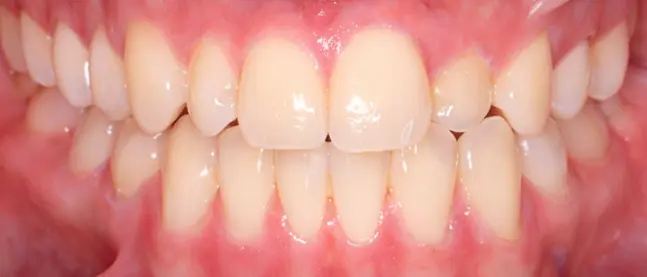
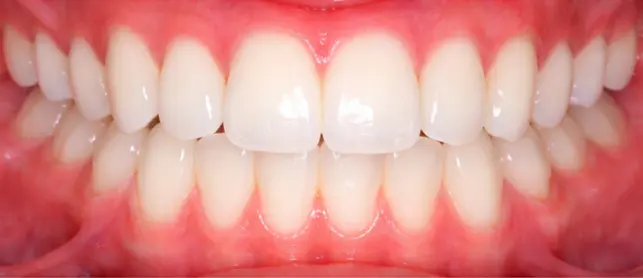
Showing clean, straight teeth and healthy gums after crossbite correction at Limestone Hills Orthodontics in Austin, TX. At Limestone Hills Orthodontics in Austin, TX, a close-up of a mouth shows clean, white teeth and healthy gums after treatment.
Before
After

Crowding: Invisalign/Clear Aligners

See more airway cases in our treated cases gallery.

How Much Does Airway-Focused Treatment Cost?

Palatal expansion (Phase 1): From $500 depending on type
Comprehensive braces: from 4,000
Clear ceramic braces: from 4,600
Angel Aligners: from 4,000
Invisalign: from 4,700

Insurance details · Community discounts

Common Appliances Used at Limestone Hills

When a narrow palate is driving the pattern, a palatal expander is the most direct tool: widening the upper jaw also widens the nasal floor, which reduces the resistance that forces the child to breathe through the mouth. For children whose airway obstruction contributes to poor sleep, Dr. Viecilli evaluates whether an airway appliance is appropriate alongside orthodontic treatment.

Frequently Asked Questions About Mouth Breathing

Is mouth breathing really a structural problem rather than a habit?

In growing children, almost always yes. The lips do not seal because something has made nasal breathing harder than oral breathing. Allergic congestion, enlarged adenoids or tonsils, a deviated septum, or a narrow upper jaw constricting the nasal floor. Treating it as a habit alone (telling the child to close the mouth) does not work because the structural reason for the open-mouth posture has not been addressed.

What does the CBCT scan actually show?

The free 3D CBCT scan at the Limestone Hills consultation captures the airway in three dimensions: nasopharyngeal volume, oropharyngeal minimum cross-section, adenoid and tonsillar tissue size, palatal width and vault depth, septal deviation, and turbinate hypertrophy. Dr. Viecilli reads the scan with the patient at the same visit and names which findings can be addressed orthodontically and which need ENT or allergy involvement.

Will palatal expansion stop the mouth breathing on its own?

For cases where the narrow upper jaw is the primary contributor, expansion alone resolves the open-mouth posture in a majority of children within 4 to 8 weeks of completing the active expansion phase. For cases with significant adenoid or tonsillar hypertrophy or chronic allergic rhinitis, the upstream airway work has to happen too. The CBCT scan answers the question for the specific patient.

Is mouth breathing causing my child’s ADHD or behavior issues?

Sleep-disordered breathing can absolutely contribute to daytime attention and behavior, and a subset of children diagnosed with attention or behavioral concerns show meaningful improvement after their airway is addressed. Limestone Hills does not market airway orthodontics as a cure for ADHD or behavioral differences. The causal chain runs through sleep quality and is best evaluated by sleep medicine and pediatrics in addition to orthodontics. Coordinating with those specialties is part of the standard plan when the clinical picture warrants it.

Can adult mouth breathing still be treated?

Yes, but the toolset shifts. Adults with a narrow upper jaw can still have skeletal expansion via MARPE (miniscrew-assisted), placed in-office by Dr. Viecilli without an oral-surgeon referral. Adults with significant nasal obstruction co-manage with ENT for septoplasty or turbinate work. Mandibular advancement device (MAD) therapy may be appropriate when the airway component is producing diagnosed sleep apnea. The free CBCT scan at consultation maps which interventions fit the individual anatomy.

Related Conditions

Tongue Thrust

Crossbite

Crowding

Open Bite

Airway Orthodontics