
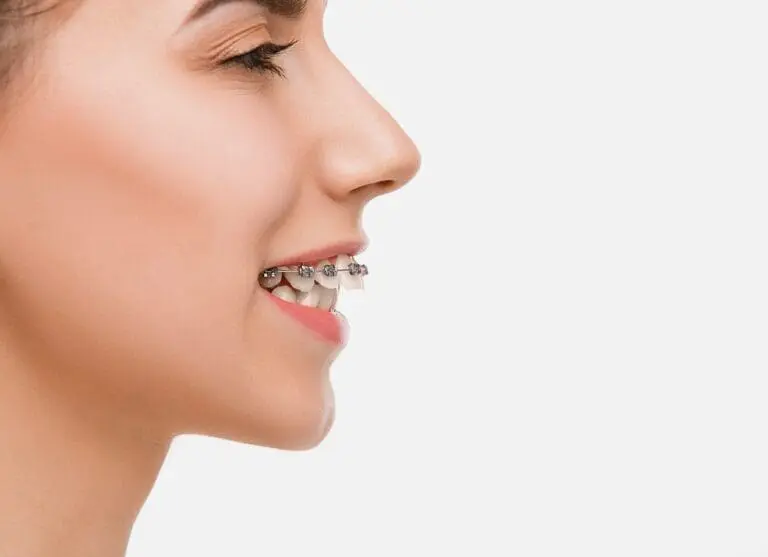
Overbite vs. Overjet: What Most People Get Wrong
Overbite and overjet are two different measurements that people often combine into a single complaint. Both can exist independently and both are recorded at every new-patient exam at Limestone Hills.
A patient can have a deep overbite without an increased overjet (Class II division 2, where the upper front teeth are tipped back and bite deeply into the lowers), an increased overjet without a deep overbite (Class II division 1, where the upper teeth flare forward), or both together. The classification matters because each pattern has a different mechanical solution.
How Severe Is Your Overbite?
Severity is measured directly from the bite registration and 3D scan. The classification below is what Dr. Viecilli uses at the consultation to set treatment time and decide whether growth modification, camouflage, or surgical coordination is the right pathway.
Mild (4–6 mm)
Treatment time: 12–18 months
Moderate (6–8 mm)
Treatment time: 18–24 months
Severe (8+ mm / Complete)
Treatment time: 18–24+ months, sometimes with jaw surgery.
Dental Overbite vs. Skeletal Overbite
Like open bite, the most consequential classification at the overbite consultation is whether the case is dental or skeletal. The treatment plans are different and the long-term stability is different.
Dental overbite is caused by tooth position alone. The jaws are in a normal skeletal relationship; the front teeth have erupted past the expected vertical position, often because the back teeth did not fully erupt or because nighttime grinding wore the lower incisors.
Treatment intrudes the front teeth or extrudes the back teeth (or both) using braces or aligners with bite ramps. Most adult deep bites without a clear skeletal Class II pattern fall into this category.
Skeletal overbite is caused by jaw position. The mandible is small, retruded, or rotated backward (Class II skeletal pattern), so even when the teeth are in the right positions on each jaw, the upper and lower teeth meet too deeply because the lower jaw is set back.
In growing children with this pattern, Herbst or MARA appliances guide the lower jaw forward during the growth window and the bite normalizes as the skeleton remodels.
In non-growing teens and adults, the choice is camouflage (braces or aligners that move teeth to compensate for the jaw position) or orthognathic surgery (advancing the lower jaw or impacting the upper jaw permanently).
The CBCT scan at the free consultation measures the skeletal indicators directly: the maxillary-mandibular vertical relationship, the position of point B relative to point A, the inclination of the mandibular plane, and the curve of Spee. Dr. Viecilli reads the data with the patient at the same visit so the dental-versus-skeletal call is made on the imaging.
When Phase 1 Treatment for an Overbite Makes Sense (Ages 7–10)
Dr. Viecilli only recommends early treatment when waiting would cost more time, money, or surgical risk later. Most children are better served by monitored growth observation until permanent teeth emerge and skeletal patterns stabilize. When early intervention is warranted, the clinical reason is specific: a crossbite causing asymmetric jaw growth, a severely impacted canine path, an airway-driven palatal narrowing, or a habit (thumb, tongue thrust) that will reshape the bite if left uncorrected. Limestone Hills runs a free Growth Observation Program for children who need monitoring rather than immediate treatment.
What Happens If a Deep Bite Is Not Treated
Deep Bites Get Worse With Age
As the lower incisors wear down from repeated contact with the upper teeth, they become shorter. Which deepens the bite further. Lost back teeth remove posterior support, causing the bite to collapse vertically. Nighttime grinding accelerates the cycle. A deep bite that is manageable at 25 can become a functional problem requiring restorative dentistry by age 40 or 50.
Lower Tooth Wear and Chipping
The lower front teeth contact the back surfaces of the upper front teeth with every bite. Over years, this wears the enamel thin and leads to chipping, fracture, and sensitivity. Eventually, restorative work (bonding, crowns, or veneers) is needed. But without correcting the bite first, those restorations will fail for the same reason the original enamel did.
Gum Damage (Traumatic Overbite)
In severe cases, the lower front teeth bite directly into the gum tissue behind the upper teeth, causing chronic irritation, recession, and even ulceration. This is a traumatic overbite, and it is an indication for orthodontic treatment regardless of cosmetic concern.
TMJ Problems
A deep bite restricts forward movement of the lower jaw. Over time, that restriction can strain the temporomandibular joints and contribute to jaw pain, clicking, and headaches. Especially in patients who also grind their teeth at night.
How Limestone Hills Diagnoses and Treats Overbite
Limestone Hills treats every deep bite case with the same five-step diagnostic sequence used for open bite. The protocol differs from the deep-bite handling at most general orthodontic practices in three specific ways.
Intrusion is started with the lightest practical archwire
Rather than at full force. Heavy intrusion forces produce root resorption (permanent shortening of the tooth root) without producing faster movement. The biomechanics literature is unambiguous on this point. Light, sustained force in the .014 to .016 inch nickel-titanium range is where intrusion happens biologically; heavier forces produce damage instead.
TAD anchorage is used when the deep bite is skeletal in an adult
Intruding the upper or lower incisors with conventional anchorage (using the back teeth as the anchor) tends to extrude the back teeth as a side effect, which rotates the mandible open and undoes part of the correction. TADs anchored in palatal or alveolar bone provide a stable anchor that does not drift, so the intrusive force lands where it is supposed to.
The choice between intrusion and posterior extrusion is made on facial analysis
Posterior extrusion is mechanically simpler but lengthens the lower face, which is desirable in some growth patterns and unwanted in others. Limestone Hills photographs the smile and resting facial profile at the consultation and shows the patient on-screen what each mechanical choice would do to the proportions before any commitment.
Treatment Options for Overbite
| Treatment | Best For | Mechanism | Starting Price |
|---|---|---|---|
| Metal Braces | Moderate to severe deep bite | Intrusion arches, reverse curve of Spee wires, Class II elastics | $4,000 |
| Clear Ceramic Braces | Moderate to severe (aesthetic preference) | Same mechanics as metal | $4,600 |
| Invisalign | Mild to moderate dental deep bite | Built-in bite ramps open the bite | $4,700 |
| Angel Aligners ← Primary aligner | Mild to moderate dental deep bite | Bite ramps, posterior intrusion, anterior extrusion | $4,000 |
| Bite Turbos | During active aligner or braces treatment | Composite buildups prevent tooth overlap while the bite opens | Included |
| Orthognathic Surgery + Braces | Severe skeletal deep bite in adults | Surgical repositioning of the lower (and sometimes upper) jaw | Coordinated with surgeon |
For Growing Children: Growth Modification with Herbst or MARA
Growing children with a skeletal Class II deep bite are candidates for a Herbst or MARA appliance that holds the lower jaw forward during the active growth spurt. The active correction window runs roughly ages 11 to 14 in most patients, with the optimal start point varying individually based on cervical-vertebrae maturation seen on the CBCT. The appliance is added to a comprehensive braces case at +$1,000 (covers fabrication, fitting, and all adjustments). Total treatment time runs 18 to 24 months end-to-end including the post-Herbst finishing phase. See the Herbst & MARA page for the full protocol.
For Teens and Adults: Intrusion Mechanics
Deep bite correction in a non-growing patient works by controlling vertical tooth position rather than moving bone.
Intrusion. Pushing the overerupted front teeth up into the bone. This is the most precise method and the most difficult to execute correctly.
Intrusion forces must be light and sustained; heavy forces cause root resorption (permanent root shortening) rather than faster movement. Dr. Viecilli starts intrusion cases on the smallest practical archwire so initial forces stay within the biological range, then progresses slowly.
Posterior extrusion. Bringing the back teeth down to open the bite by rotating the mandible. This is simpler mechanically but increases lower-face height, which is not desirable in every facial type. The choice between intrusion and extrusion is made on facial analysis, CBCT measurements, and long-term stability. Not on whichever moves the front teeth fastest.
Bite turbos. Small composite buildups on the back teeth that prevent the front teeth from overlapping during treatment. Turbos open the bite mechanically right away so the archwire or aligner sequence can reposition the teeth without the lower incisors hitting the upper brackets or attachments. They come off at the end of treatment.
Clear Aligners for Mild to Moderate Overbite
Both Invisalign and Angel Aligners can correct mild-to-moderate dental deep bites using built-in bite ramps (small acrylic blocks on the upper aligners that prevent the lower front teeth from contacting the back of the upper aligner). Bite ramps mechanically open the bite during the day so the aligner sequence can intrude the front teeth and extrude the back teeth in the background. For moderate-to-severe deep bites where intrusion has to come predominantly from the upper incisors, braces with intrusion arches or bite turbos remain more predictable than aligners. The CBCT scan and intraoral exam at the consultation answers the aligner-versus-braces question for the specific case rather than defaulting to whichever appliance the patient asks for first.
When Does an Overbite Need Jaw Surgery?
Dr. Viecilli refers a deep bite for orthognathic surgery evaluation when the CBCT confirms a severe skeletal Class II pattern in a non-growing patient and camouflage with braces or aligners would either fail to produce a stable result or compromise the facial profile in ways the patient cannot live with. Most cases that look severe to the patient are still correctable with orthodontics alone, and the practice opens that conversation explicitly so patients are not pushed toward surgery that the imaging and clinical findings do not require. When surgery is the right answer, Limestone Hills handles the pre- and post-surgical orthodontics and partners directly with an oral and maxillofacial surgeon who handles the surgical fees and pre-authorization separately.
When the case is severe and skeletal in a non-growing patient, Limestone Hills coordinates pre- and post-surgical orthodontics with a partnered oral and maxillofacial surgeon. Pre-surgical orthodontics decompensates the bite (moves the teeth into their true skeletal positions, which can temporarily make the appearance worse before surgery). The surgeon then advances or impacts the affected jaw. Post-surgical orthodontics fine-tunes the new occlusion. Total treatment runs 24 to 36 months end-to-end. The orthognathic fee is billed separately by the surgeon; the orthodontic component is part of the comprehensive Limestone Hills case.
Typical Treatment Timeline
| Stage | Duration | What Happens |
|---|---|---|
| Records & planning | 1–2 visits | Medit i700 digital scan, free 3D CBCT, facial analysis, dental-vs-skeletal classification |
| Phase 1 (growing children only) | 9–12 months | Herbst or MARA for mandibular advancement if skeletal |
| Bite opening | 3–6 months | Bite turbos plus intrusion or extrusion mechanics |
| Alignment & detailing | 6–12 months | Level arches, refine the occlusion, close any remaining overjet |
| Retention | Indefinite nighttime wear | Two sets of Essix retainers included; Retainer Club for reorders |
What to Expect at Your Consultation
Digital intake
Medical history, TMJ screening, wear-pattern review, and what the patient or parent wants corrected.
Comprehensive records
Medit i700 digital intraoral scan, clinical photos, and a free 3D CBCT for dental-versus-skeletal classification
Diagnosis with Dr. Viecilli
Overbite and overjet measured on-screen; dental, skeletal, or combined identified and explained in plain language
Treatment options and timeline
Braces, Invisalign, Angel Aligners, Herbst/MARA, and surgical coordination all discussed when they apply. Phase 1 recommendations for children include a written rationale.
Exact pricing
Insurance estimate, financing options, and any family, teacher, or military discount applied right there. No same-day contract required.
Before & After
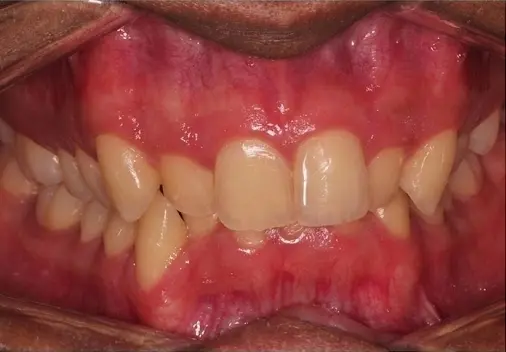
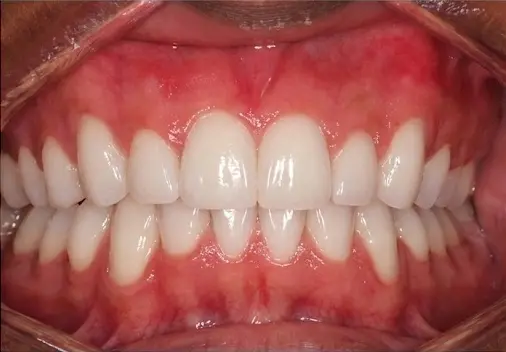
Deep Overbite: Braces with Bite-Pads
See more overbite corrections in the Limestone Hills smile gallery.
How Much Does Overbite Treatment Cost?
Phase 1 growth-modification fees for children are quoted at the consultation once the dental-vs-skeletal classification is made.
Insurance & Financing
Most PPO orthodontic plans cover a portion of the comprehensive case the deep-bite treatment is part of. When orthognathic surgery is required, the surgical fee is billed separately by the surgeon and is often covered by medical (not dental) insurance when functional indications are documented.
Limestone Hills verifies dental benefits at the consultation and provides the diagnostic codes the medical carrier needs for orthognathic pre-authorization.
Community discounts (military, teachers, first responders, healthcare workers, family) apply when the treatment is part of a comprehensive plan.
Common Appliances Used at Limestone Hills
Correcting a deep overbite requires braces to level the bite by moving teeth vertically, a more complex mechanical task than simple alignment. When the overbite is driven by a Class II jaw relationship in a growing patient, Dr. Viecilli adds a MARA or Herbst appliance to guide the lower jaw forward during the growth window.