

What Is an Open Bite?
An open bite is a malocclusion where the upper and lower front teeth do not contact when the back teeth are closed together. Anterior open bite, the most common variety, presents as a vertical gap between the upper and lower incisors when the patient bites down. Posterior open bite is rarer and presents as one or more back teeth that fail to occlude.
The functional consequences depend on severity. Mild anterior open bite produces a lisp on s and z sounds and difficulty biting into thin foods like lettuce or sandwiches.
Severe open bite affects chewing efficiency, accelerates wear on the posterior teeth that take all the load, and places measurable strain on the temporomandibular joint. Cosmetically, a visible gap between the front teeth at rest or during speech is the most common patient concern.
Open bite has the highest relapse rate of any malocclusion in orthodontics. The reason is structural: the forces that produced the open bite (tongue posture, mouth breathing, vertical growth pattern) usually persist through treatment unless they are addressed directly.
Closing the gap mechanically without correcting the underlying cause is a treatment that re-opens within months. Limestone Hills approaches every open bite case with a cause-mechanics-retention sequence rather than a mechanics-only shortcut.
Anterior vs. Posterior Open Bite
Anterior open bite is the typical case. Upper and lower incisors fail to overlap when the molars close. Causes are usually behavioral (tongue thrust, thumb or pacifier habit, mouth breathing) or skeletal (long-face vertical growth pattern, downward maxillary rotation). Treatment hinges on whether the cause is dental or skeletal, which the CBCT scan answers in three dimensions.
Posterior open bite is uncommon and usually points to a structural cause: ankylosed primary molar (a baby tooth fused to the bone, blocking the permanent tooth from erupting fully), an unerupted or impacted permanent molar, or a developmental skeletal asymmetry.
Posterior open bite is generally NOT corrected by aligners or braces alone; the underlying cause has to be evaluated, often with input from oral surgery or a pediatric specialist, before orthodontic mechanics can close the gap.
Dental Open Bite vs. Skeletal Open Bite
The single most consequential classification at the open-bite consultation is whether the case is dental or skeletal. The treatment plans are different, the prognosis is different, and the need for surgical coordination is different.
Dental open bite is caused by tooth position only. The jaws meet correctly at a skeletal level; the front teeth fail to overlap because of a habit pattern (tongue thrust, thumb sucking, mouth breathing) or a localized eruption issue. Treatment closes the gap with braces or aligners plus vertical elastics after the habit is addressed.
Most pediatric and adolescent open bites are dental and respond well to non-surgical treatment.
Skeletal open bite is caused by jaw position. The maxilla has rotated downward (long-face vertical growth pattern), the mandible has rotated open, or both.
The vertical excess between the jaws cannot be closed by tooth movement alone in adults; the front teeth would have to extrude an unrealistic amount and would relapse the moment retention failed.
For mild adult skeletal open bites, intrusion of the posterior teeth using TADs (temporary anchorage devices) can rotate the mandible upward and close the bite without surgery. For severe adult skeletal cases, orthognathic surgery to reposition the maxilla is the predictable solution.
The CBCT scan at the free consultation measures three data points that determine the classification: the vertical jaw relationship at point B relative to point A, the angular position of the maxilla against the cranial base, and the inclination of the mandibular plane.
Dr. Viecilli reads the data with the patient at the same visit so the dental-versus-skeletal call is made on the imaging, not on a clinical guess.
What Causes an Open Bite?
The three most common drivers in growing patients are behavioral and reversible if caught early; the fourth is skeletal and addressed differently:
The Limestone Hills Approach to Open Bite
Dr. Viecilli treats open bite as a three-layer problem rather than a tooth-position problem. Layer one is the cause. Tongue thrust, mouth breathing, thumb habit, or skeletal vertical excess. Each is addressed before mechanical treatment begins so the orthodontic work is not undermined the moment the appliance comes off. Layer two is the mechanical closure with braces, aligners, or in adult skeletal cases TAD intrusion. Layer three is retention. Essix retainers worn nightly with a daily biting-exercise protocol, never a bonded lingual wire as the open-bite default. Limestone Hills classifies dental versus skeletal on the CBCT at the free consultation and names the surgical-coordination case openly when the skeletal pattern is severe, rather than promising a non-surgical correction the imaging does not support.
The practical translation: every Limestone Hills open-bite case starts with a CBCT-based dental-versus-skeletal classification and a tongue-and-airway exam, not with a treatment menu. The mechanics phase begins only after the underlying cause has been identified and a habit-correction or referral plan is in place.
The retention phase begins the moment the bite is closed, with Essix retainers and daily biting exercises rather than a bonded lingual wire that traps food and complicates flossing for an unpredictable retention benefit.
Treatment Options, Matched to the Cause
Treatment is matched to the cause, not the visible symptom. Three layers, in order:
Layer 1: Address the Cause
Tongue thrust gets a myofunctional exercise protocol (in-office or referral to a credentialed therapist) that runs concurrently with mechanical treatment. Thumb sucking in a child past age 5 gets a habit-breaker appliance.
Mouth breathing gets an ENT or allergy referral first; orthodontic treatment that does not address the airway produces relapse.
Skeletal vertical excess is identified from the CBCT and either monitored (in growing children where vertical pull chin cup may modulate growth), treated with TAD intrusion (mild-to-moderate adult), or referred for orthognathic surgical evaluation (severe adult).
Layer 2: Close the Bite Mechanically
Once the cause is being addressed, mechanical closure uses braces or aligners with vertical elastics anteriorly to extrude the front teeth. For adult skeletal cases where tooth extrusion alone would relapse, posterior intrusion with TADs rotates the mandible upward and closes the bite without extruding the front teeth.
The mechanics are selected on the imaging and the cause; the visible treatment is the consequence.
Layer 3: Retain Aggressively
Open bite has the highest relapse rate of any malocclusion. Retention is Essix retainers worn nightly indefinitely, plus a daily biting-exercise protocol (close on the back teeth, hold for 5 seconds, release; repeat for two minutes morning and evening) that keeps the anterior contacts active.
Bonded lingual retainers are NOT the LH default for open bite because they trap food, complicate hygiene, and offer no retention benefit beyond what nightly Essix wear delivers. Myofunctional follow-up every 6 to 12 months for the first two years confirms the tongue habit has not regressed.
How Limestone Hills Diagnoses Open Bite
Every open-bite consultation at Limestone Hills includes the same five-step diagnostic sequence:
Clinical Exam
Bite registration in centric occlusion, range-of-motion measurement, and palpation of masticatory muscles for hyperactivity. The exam answers two early questions: is the open bite anterior or posterior, and how severe is the vertical gap.
3D CBCT Scan
The free CBCT (i-CAT FLX V7) captures the maxilla, mandible, condylar position, and airway in three dimensions. Dr. Viecilli measures the skeletal indicators (point A versus B vertical, mandibular plane angle, occlusal plane inclination) personally. The scan also visualizes any unerupted teeth, ankylosed primary molars, or sinus-airway findings that change the plan.
Tongue and Airway Exam
Tongue rest position is documented at rest and during swallowing. Tongue-tie (ankyloglossia) is screened. Airway patency is assessed clinically alongside the CBCT airway data. When the case has an airway component, the consultation closes with an ENT or allergy referral as well as the orthodontic plan.
Digital Intraoral Scan
A Medit i700 scan captures the dental arches in 3D digital format. The scan is used to design the eventual mechanical treatment (bracket positions, attachment locations for aligners, vertical elastic anchor sites) before any appliance is ordered.
Three-Layer Treatment Plan
The consultation closes with a written plan that names the cause-correction step, the mechanical-closure approach, and the retention protocol. Cost is quoted in writing for the comprehensive case before any commitment is made.
Stability Protocol – Cause, Mechanics, Retention
The Limestone Hills stability protocol for open bite is built on the three-layer rule: cause, mechanics, retention. Each layer has a measurable success criterion before the case advances to the next layer.
Open-bite cases are followed at three, six, and twelve months post-treatment, then annually. Limestone Hills treats relapse risk as the durability problem it is, not as a patient-compliance failure to be discovered after the fact.
Retention After Open Bite Correction
Retention at Limestone Hills runs by indication, not by a single recipe. The default for most cases is upper and lower Essix retainers worn nightly indefinitely, with the patient learning the tightness test (the retainer should snap into place with a fingernail click) so that compliance is something the patient controls rather than monitors at appointment intervals. Bonded fixed retainers are reserved for specific clinical indications, primarily an upper diastema with a thick gingivally positioned frenum that would re-open without permanent retention, and are not the default behind the lower front teeth because they complicate flossing and can fail silently when the bond breaks without the patient noticing.
For open bite specifically, retention is Essix retainers worn nightly for the indefinite future plus the daily biting-exercise protocol described above.
Bonded lingual retainers are not the Limestone Hills default for open-bite cases because the habit drivers (tongue posture, airway pattern) are the durability problem, not a missing anchor wire across the front teeth.
Essix protects the posterior contacts at night when bruxism risk is highest and lets the patient confirm during the day that the bite is still closing on the front teeth.
Treatment Options for Open Bite
| Treatment | Best For | Mechanism | Starting Price |
|---|---|---|---|
| Metal Braces + Vertical Elastics | Most dental open bites | Anterior extrusion + elastics + habit correction | $4,000 |
| Clear Ceramic Braces | Aesthetic preference | Same mechanics as metal braces | $4,600 |
| Invisalign | Mild dental open bite | Aligners with precision cuts for elastics | $4,700 |
| Angel Aligners ← Primary aligner | Mild-to-moderate dental open bite | Anterior extrusion + posterior intrusion with attachments | $4,000 |
| Habit Breaker Appliance | Tongue thrust / thumb sucking cases where exercises alone do not resolve | Tongue crib or spur blocks tongue from pressing forward | Included in comprehensive |
| Myofunctional Exercise Protocol | All tongue-thrust open bites | Retrain tongue posture and swallowing pattern | Included |
| Orthognathic Surgery | Severe adult skeletal open bite | Surgical reposition of maxilla and/or mandible | Coordinated with oral surgeon |
Typical Treatment Timeline
| Stage | Duration | What Happens |
|---|---|---|
| Records & classification | 1–2 visits | Digital scan, photos, 3D CBCT, tongue habit and airway assessment |
| Cause correction | 4–12 weeks to habit improvement | Myofunctional exercises begin; airway and tongue-tie addressed if present |
| Mechanical closure | 14–22 months | Braces or aligners close the anterior gap with vertical mechanics |
| Detailing | 3–6 months | Final bite refinement and settling |
| Retention | Indefinite nights plus daytime tongue posture | Essix retainers with daily biting exercises |
What to Expect at the Consultation
The free Limestone Hills consultation runs about an hour and includes everything the practice needs to write a treatment plan: clinical exam, 3D CBCT scan, intraoral scan, tongue and airway assessment, photos for records, and a written cost breakdown. Patients leave with a clear answer to four questions.
Before & After
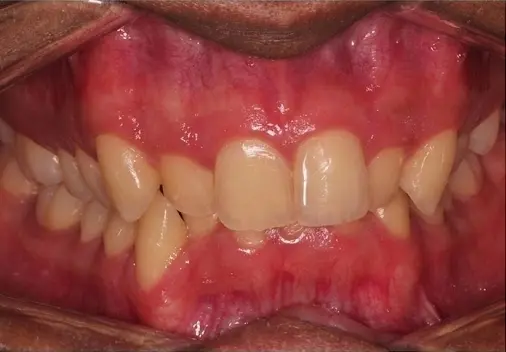
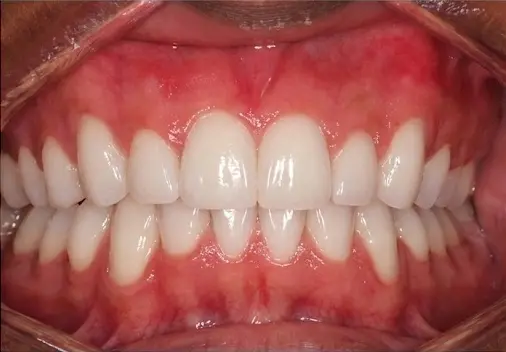
Deep Overbite: Braces with Bite-Pads
See more open bite cases in the smile gallery.
How Much Does Open Bite Treatment Cost?
Open-bite treatment fees at Limestone Hills are the same comprehensive treatment fees that apply to any case of equivalent complexity. The habit-breaker appliance, myofunctional exercise protocol, and the multi-month retention follow-up are all included in the comprehensive fee when clinically indicated.
Standalone open-bite work (rare; usually a transferred case mid-treatment) is quoted at the consultation.
Phase 1 (early interceptive treatment, typical age 7–10): Braces from $2,000 · Angel Aligners from $3,000 · Invisalign First from $3,700
Habit breaker appliances and the myofunctional exercise protocol are included in comprehensive treatment when clinically indicated.
Financing
Most PPO orthodontic plans cover a portion of the comprehensive case the open-bite treatment is part of. Community discounts (military, teachers, first responders, healthcare workers, family) apply when the treatment is comprehensive. Limestone Hills verifies dental benefits before treatment begins.
Common Appliances Used at Limestone Hills
Skeletal open bite cases at Limestone Hills are corrected with temporary anchorage devices that intrude the back molars, allowing the front teeth to close without surgical intervention. Dr. Viecilli’s retention protocol pairs an Essix retainer with targeted biting exercises so the muscles that caused the opening learn a new resting position.