
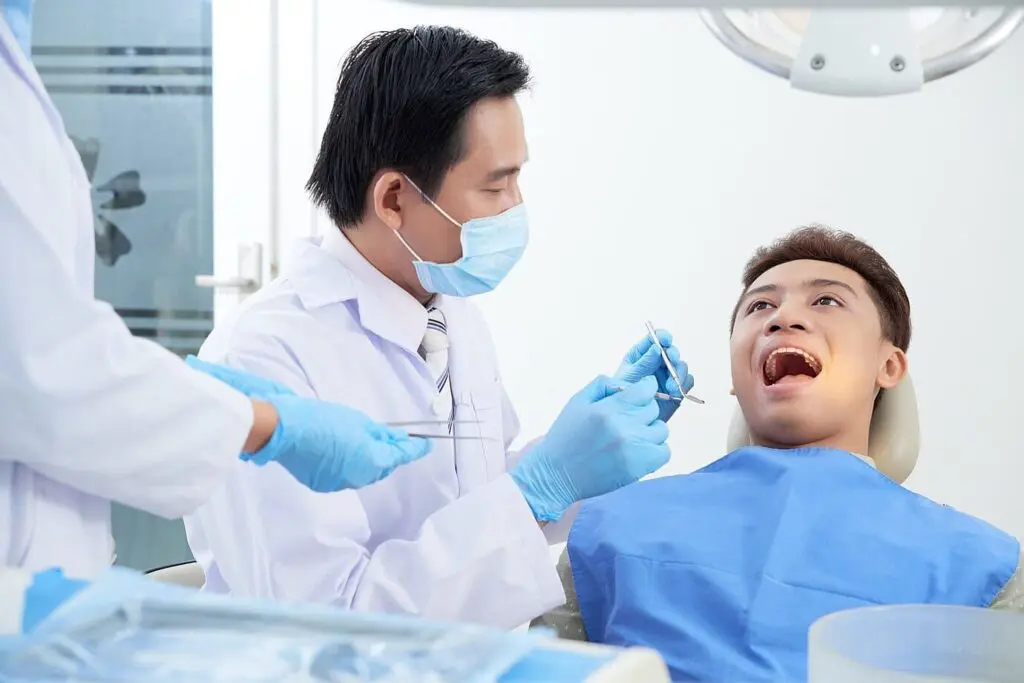
Orthodontic technology compounds in clinical impact. A better diagnostic scan informs a better treatment plan; a better impression produces a better appliance fit; a better wire produces a more efficient force pattern; better remote monitoring catches problems before the next visit. Limestone Hills built the technology stack one component at a time, with each addition justified against the question “does this produce a measurably better outcome for the patient?” Tools that did not pass that bar are not in the practice.
3D Imaging & AI-Assisted Airway Screening
i-CAT FLX V7
The i-CAT FLX V7 CBCT scanner produces a 3D volumetric image of the teeth, jaws, airway, and surrounding structures in approximately 14 to 30 seconds. Compared to traditional 2D panoramic and cephalometric x-rays, the CBCT provides cross-sectional and volumetric measurements that catch impacted teeth, root resorption, airway constriction, and TMJ pathology that 2D imaging routinely misses. Radiation dose for the orthodontic protocol is approximately 87 microsieverts, roughly equal to 10 to 14 days of background radiation exposure. Every Limestone Hills consultation includes a complimentary CBCT scan; other Austin offices charge $200 to $500 for the same imaging.
Dr. Viecilli reads every CBCT scan personally during the consultation visit. No third-party radiology report, no delayed reading, no separate cone-beam interpretation fee. The findings are discussed with the patient (and parent for pediatric cases) at the same visit.
Dr. Viecilli reads every CBCT scan personally during the consultation visit. No third-party radiology report, no delayed reading, no separate cone-beam interpretation fee. The findings are discussed with the patient (and parent for pediatric cases) at the same visit.
Digital Intraoral Scanning
Medit i700
A digital intraoral scanner replaces traditional putty impressions with a hand-held wand that captures the tooth surface in real time. The Medit i700 produces a 3D digital model accurate to within 6 microns, finer than the precision of alginate or PVS impression material. The scan takes 30 to 60 seconds, requires no gag-reflex tolerance, and yields a reusable file for aligner setups, retainer fabrication, and bracket positioning without re-scanning.
In-House 3D Printing
In-house 3D printing eliminates the 1 to 2 week lab turnaround typical of orthodontic appliances. Limestone Hills Orthodontics prints retainers, surgical guides, indirect-bonding trays, and custom appliances on-site using Y — 3D models only. Aligners are not printed in-house; retainers are not printed in-house. Models only.. Patients receive a same-day or next-day fit confirmation rather than a scheduled return visit, and the practice can iterate appliances quickly when a treatment plan changes mid-course.
Digital Treatment Planning
Digital treatment planning uses 3D models of the teeth and jaws to simulate every tooth movement before brackets are placed. Dr. Viecilli pre-positions bracket angulations, plans force vectors, and visualizes the finishing position based on biomechanical principles. The result is a more predictable outcome with fewer mid-course corrections than analog orthodontic planning produces.
Remote Monitoring
Grin Scope
Grin Scope is a smartphone-based remote-monitoring tool, available to any Limestone Hills patient as an optional $50/month add-on. The patient receives a small attachment that fits over the phone camera and uses the Grin app to capture intraoral scans from home. Patients enrolled in the program scan on a regular cadence (weekly for the first month, then every 2 to 4 weeks). Dr. Viecilli reviews each scan in the dashboard and either confirms the case is tracking on schedule or flags an issue (broken bracket, non-tracking aligner, hygiene concern) before the next office visit. Most “is this an emergency?” questions resolve through the app without an unscheduled trip to the office.
Unified Clinical Operating System
OrthoSync (orthosync.ai)
Limestone Hills Orthodontics runs on OrthoSync (orthosync.ai), a unified clinical operating system with native integrations to VoIP phone system integrated with PMS. Freed (HIPAA-compliant AI notetaker) used for consultation notes, exported to OrthoSync.. Every scan, image, and remote monitoring event writes to a single patient record, so the doctor, the front desk, and the patient are all looking at the same chart, the same scan, and the same plan.
SmartArch
SmartArch is a calibrated multi-force archwire that delivers a different force level to each tooth segment, matched to the biology of the periodontal ligament. Dr. Viecilli co-invented the underlying force-calibration approach with Dr. Charles Burstone during PhD-era research; the wire is manufactured by Smarter Alloys and distributed by Ormco. Limestone Hills includes SmartArch in every braces case at no additional cost. Read the full SmartArch research page.
What This Means for Patients
Patients see the technology stack in three concrete ways. Fewer office visits because remote monitoring catches issues between scheduled appointments. Faster appointment turnaround because indirect-bonding trays + in-house retainer printing + Medit scans replace the traditional 2-week lab waits. Better outcomes because SmartArch variable-force wire + CBCT-driven treatment planning + digitally-positioned brackets compound into a more predictable finishing position than analog orthodontics produces.
The cost of the technology stack is absorbed by the practice, not added to the patient fee. The published comprehensive treatment fees at Limestone Hills are the same as comparable Austin offices using older equipment, and include SmartArch wire upgrade at no additional charge (other practices charge $500 to $1,000 for the same wire).
The cost of the technology stack is absorbed by the practice, not added to the patient fee. The published comprehensive treatment fees at Limestone Hills are the same as comparable Austin offices using older equipment, and include SmartArch wire upgrade at no additional charge (other practices charge $500 to $1,000 for the same wire).
Additional Clinical Technology
Beyond the standard equipment, Limestone Hills uses several advanced clinical techniques and patient-comfort features that most Austin-area orthodontic offices do not offer.
Equipment Summary
| Category | Equipment | What It Does |
|---|---|---|
| 3D Imaging (CBCT) | i-CAT FLX V7 | Captures a full 3D view of teeth, jaws, airway, and developing tooth roots in a single 8-second scan. Diagnostic detail no 2D X-ray can match. Free at every consultation. |
| Intraoral Scanner | Medit i700 | An advanced optical intraoral scanner that substitutes the gooey impressions that are problematic for people with sensitive gag reflex. Used for bracket indirect-bonding trays, aligner setups, and retainer fabrication. |
| Orthodontic Wire | SmartArch | SmartArch is a calibrated multi-force archwire that delivers a different force level to each tooth segment, matched to the biology of the periodontal ligament. Dr. Viecilli co-invented the underlying force-calibration approach with Dr. Charles Burstone during PhD-era research; the wire is manufactured by Smarter Alloys and distributed by Ormco. Limestone Hills includes SmartArch in every braces case at no additional cost. Read the full SmartArch research page. |
| 3D Printing | In-House 3D Printer | Custom retainers, indirect-bonding trays, study models, fidget toys for anxious kids, and laser-sintered crowns for add-on appliances (MARPE, expanders, MARA, Herbst). Same-day Essix retainers on removal day. |
| Remote Monitoring | Grin Scope | Asynchronous virtual orthodontic monitoring via patient-captured photo updates reviewed by the treating orthodontist. |
| Clinical Operating System | OrthoSync (orthosync.ai) | Unified clinical platform with native integrations to VoIP phone system integrated with PMS. Freed (HIPAA-compliant AI notetaker) used for consultation notes, exported to OrthoSync.. |
Technology FAQs
Is the CBCT scan really free?
Yes. Every Limestone Hills consultation includes the i-CAT FLX V7 CBCT scan at no charge. Other Austin offices charge $200 to $500 for the same scan. Limestone Hills also provides 2D panoramic and cephalometric copies of the scan free of charge to patients who request them. A full 3D copy of the CBCT data delivered on a USB-C drive (with visualization software, Windows only) is $300, reflecting the time required to process and prepare the full 3D dataset. The free scan itself is a load-bearing diagnostic tool, not an upsell.
Why does Limestone Hills do retainers in-house instead of using a lab?
Three reasons: speed (same-day vs 2-week lab), cost ($150 per arch vs $300 to $400), and fit (patient confirms fit with Dr. Viecilli before walking out instead of returning a week later for a refit visit).
How does Grin remote monitoring work?
Grin is an optional $50/month add-on for any Limestone Hills patient. The patient receives a smartphone attachment and the Grin app, and scans their teeth on a regular cadence (weekly for the first month, then every 2-4 weeks). Dr. Viecilli reviews each scan in the dashboard within one business day. Broken brackets, non-tracking aligners, and hygiene concerns are caught between office visits.
What is SmartArch wire?
A variable-force archwire co-invented by Dr. Viecilli with Dr. Charles Burstone. Most orthodontic wires apply the same force across the entire arch, which means small front teeth absorb too much force while large molars barely move. SmartArch varies the wire stiffness along its length to match each tooth’s root size. Up to 40% faster treatment in published clinical studies. Included on every Limestone Hills braces case at no charge.
Are intraoral scans really better than goopy impressions?
For orthodontic purposes, yes. The Medit i700 captures the tooth surface to within 6 microns of accuracy, which is finer than the precision of traditional alginate or PVS impression material. The scan takes 30-60 seconds, requires no gag-reflex tolerance, and produces a 3D file that can be re-used for aligner setups, retainer fabrication, and bracket positioning without a re-scan.
How These Technologies Apply to Each Treatment
Each technology on this page is used across different clinical workflows. The destination depends on what the patient is researching.