

Who Plans and Monitors Aligner Treatment

Dr. Rodrigo F. Viecilli, DDS, PhD
Why Limestone Hills Leans Toward Angel Aligners for Most Adults
How Limestone Hills Chose Its Primary Aligner Platform
Limestone Hills offers Invisalign as the primary aligner system and Angel Aligners as a more affordable second option because no single aligner brand is the right fit for every patient or budget. Invisalign carries the longest clinical track record and the deepest treatment-planning toolset; Angel Aligners deliver comparable precision at a lower lab cost because the company distributes only through orthodontists, not general dentists. Angel Pro specifically uses a two-stage tray for each step: a softer tray begins the movement and primes the periodontal ligament, then a firmer tray completes the movement once the tissue is responsive. Most other aligner systems (Invisalign included) use a single tray per step. The two-tray approach reduces the patient discomfort spike at each switch and gives Dr. Viecilli more reliable tracking on cases where compliance or biology is borderline.
Both Angel Aligners and Invisalign are FDA-cleared, clinically proven systems with long track records. The choice between them is a clinical and practical judgment call. Not a single right-answer question.
After running the same 20 cases through both ClinCheck (Invisalign) and iOrtho (Angel), the Limestone Hills team saw consistently more efficient setups on the Angel side. That finding moved Angel to the primary platform.
Invisalign stays in the toolkit for patients whose case, preference, or insurance specifically points that direction.
Angel Aligners vs Invisalign: Honest Comparison
How Limestone Hills Approaches Braces vs Clear Aligners
Limestone Hills runs both Angel Aligners and Invisalign so the platform fits the case rather than the case fitting the platform. Dr. Viecilli leans toward Angel Aligners for most adult cases: Angel trays are stiffer, which gives better root control on extraction or rotation cases, and Angel Pro carries a free braces-switch guarantee that Invisalign does not. Invisalign is selected when a case calls specifically for the Invisalign appointment-pacing protocol, the SmartTrack material, or when the patient already has a treatment record at another Invisalign office. Either way, the choice between aligners and braces is the first conversation. Aligners are the right choice for alignment with mild-to-moderate bite work and reliable wear; braces carry the edge on extractions, large rotations, and complex vertical control. The recommendation is shown on the 3D scan at the free consultation.
| Feature | Angel Aligners Lower Entry | Invisalign |
|---|---|---|
| Price at Limestone Hills | From $4,000 | From $4,700 |
| Elastic Buttons | Transparent angelButtons built in | Metal buttons bonded to teeth |
| Marketed To | Orthodontists only | Orthodontists + general dentists + patients |
| Material | Three-layer high-polymer | SmartTrack single-layer polyurethane |
| Refinements | Included | Included |
| Retainers | Included | Vivera included |
| Free Braces Switch | Yes (Select & Pro tiers) | No |
Free Braces Switch Guarantee
Who Is a Good Candidate for Clear Aligners in Austin?

Good Candidates
Adults and teens with mild to moderate crowding, spacing, rotated teeth, tipped teeth, or bite problems (overbite, underbite, crossbite, mild open bite) who can commit to wearing aligners 20–22 hours per day.
Aligners also work well for patients who have previously had orthodontic treatment and experienced relapse, for professionals and public-facing adults who need a discreet option, and for teens whose parents want a less-visible alternative to braces without dropping to a compromised finish.
Case Types Aligners Can Treat at Limestone Hills Orthodontics
When Braces Are the Better Choice
When Limestone Hills Recommends Braces Instead of Aligners
Some difficult cases can be treated with aligners, but aligners are not always the most predictable tool. Dr. Viecilli replaces aligners with braces when the case involves severe tooth rotation (more than 20 degrees), significant vertical movement (intrusion or extrusion of individual teeth), complex anchorage requirements where each tooth needs an independent force vector, growing patients who will not reliably wear trays 22 hours a day, or skeletal discrepancies that need expanders, functional appliances, or surgical coordination. The deciding factor is not aligner marketing or patient preference. It is whether the trays can actually deliver the force pattern the bite requires.
Aligners are not the right tool for every case.
Severe skeletal discrepancies that require orthognathic surgery, large extraction-space closures that need heavy mechanical control, deep bites with torque demands beyond aligner capability, and younger children whose compliance is unreliable are situations where braces deliver a more predictable result. Dr. Viecilli evaluates the CBCT, intraoral scan, and photographs together before recommending a platform, and will send patients to braces when braces are the more reliable path.
A hybrid approach is common at Limestone Hills Orthodontics when a single platform is not ideal for the full case. The typical sequence is to start in clear aligners for the bulk of treatment and finish in braces for the final precision movements. The patient stays in the esthetic modality for most of the treatment and gets the mechanical control of fixed appliances only at the end.
Complex Aligner Cases at Limestone Hills Orthodontics
Most aligner treatment is straightforward. Some cases are not. For open-bite correction with airway considerations, pre-surgical alignment coordinated with an oral surgeon, extraction-space closure on an adult arch, or esthetic aligner work planned around cosmetic dentistry, Limestone Hills Orthodontics leans on the experience Dr. Viecilli brings to complex planning.
Dr. Viecilli personally positions each tooth in the digital treatment plan before aligners are manufactured. No technician defaults, no software auto-setups accepted without review.
The complex-case protocol at Limestone Hills includes CBCT-integrated aligner setups on every case, AI-assisted airway screening, simulation against the patient’s specific case, and detailed finishing protocols designed to deliver a more esthetic final round of refinements.
Wear Time, Compliance, and Staying on Track
Aligners work by moving teeth in small, programmed increments every two weeks. That only works when the aligners are actually in the mouth. Limestone Hills Orthodontics asks patients to wear aligners 20–22 hours per day, removing them only to eat, drink anything other than water, and brush.
Less than 20 hours per day causes teeth to shift partway between programmed positions. Trays stop fitting the next week, tracking breaks down, and total treatment time stretches out.
Compliance at Limestone Hills
Dr. Viecilli talks to teens directly, not around them. The lecture is short and numeric. Aligners need 22 hours of wear every day to work. Rubber bands need to be changed every day and worn as instructed. Missing those targets adds months to treatment. He does not guilt-trip or scare teens. He tells them exactly what each choice costs in time and why. Grin remote monitoring catches non-compliance early so a slip becomes a conversation in the first week, not a surprise six months in.
When a Patient Falls Behind on Wear
Dr. Viecilli catches non-compliance early through Grin remote monitoring or in-office tracking checks at every visit. If the scans show teeth lagging behind the digital plan, the practice knows before the next appointment rather than discovering the gap two trays in. The first response is a direct conversation with the patient (and the parent for teen cases) about wear targets and the specific cost in months that under-wearing adds. If wear does not improve, Dr. Viecilli switches the case to braces. The remaining treatment finishes on a fixed appliance the patient cannot remove. No guilt-tripping, no contract penalties, just a different tool that delivers the result the aligner could not.
Every Limestone Hills aligner patient is enrolled in the Grin Scope remote-monitoring app at no additional cost. A quick smartphone scan from home or school shows Dr. Viecilli exactly how the aligners are tracking between progress visits. If a tooth is starting to drift off-plan, the doctor catches it early.
The earlier a tracking problem is caught, the easier it is to correct with an additional attachment, light interproximal reduction, or a treatment plan update. Families who live further out in the surrounding communities especially benefit from monitoring that does not always require an in-person visit.
How Clear Aligner Treatment Works
Free Consultation + CBCT
Dr. Viecilli takes a 3D CBCT scan, reviews intraoral photos, and evaluates the bite, crowding, skeletal relationship, airway, and facial balance. If aligners are appropriate, the doctor recommends the specific system and tier. If braces are the better clinical path, the doctor says so. Even when a family arrives specifically asking for aligners.
Digital Treatment Plan
A 3D plan maps every tooth movement start to finish. Dr. Viecilli personally positions each tooth in the software. You review the plan and provide input before aligners are manufactured.
Wear 20–22 Hours Per Day
Remove only for eating, drinking anything other than water, and brushing. Each set worn approximately two weeks. If elastics are prescribed, angelButtons (Angel) or bonded buttons (Invisalign) provide the attachment point.
Progress Checks Every 6–8 Weeks
Dr. Viecilli monitors tracking at each visit. When teeth are not moving as planned, the doctor adjusts on the spot: additional attachments, interproximal reduction, a revised setup, or switching to braces when mechanical control is needed. Angel patients with treatment plans of 18 months or longer benefit from a free braces switch guarantee. Between visits, the Grin Scope app lets patients send a quick smartphone scan so Dr. Viecilli can review tracking without an extra in-office trip.
Refinement Rounds
When the planned aligner set finishes, teeth are almost always close to the target. But rarely a perfect match for the digital plan. Refinement trays correct the remaining small discrepancies. Both Angel and Invisalign include refinements in the treatment fee. Most Limestone Hills patients need two or three refinement rounds to reach a finished result.
Retention
Every Limestone Hills aligner case includes two sets of Essix retainers at completion. The second set stored as a spare. Retainers are worn 12 hours per day (overnight plus a few extra hours) for the first six months. After six months, when teeth are confirmed stable, wear drops to nighttime only, and nighttime wear continues indefinitely to prevent relapse.
Refinements and Retention: What Is Included
The Limestone Hills Refinement Protocol
For aligner cases estimated at more than 12 months at consultation, Limestone Hills includes two refinement rounds at no additional charge. Refinements are additional aligner trays produced after the initial series finishes, used to fine-tune the final tooth positions. Most cases finish within the original aligner series; the included refinements ensure the result holds when biology responds slightly differently than the digital plan predicted.
Aligner refinement is routine, not a failure. Even the best digital plan cannot perfectly predict how every tooth will respond to force through bone. Both Angel Aligners and Invisalign provide refinement aligners as part of the contracted fee. Patients do not pay extra when a second or third round is needed to finish the case.
At Limestone Hills Orthodontics, the approach to refinements leans on Angel’s five-year unlimited refinement policy and a finishing protocol the doctors developed in-house.
In the final refinement round, bonded attachments come off and detail movements are completed using Angel’s full high-trimline aligner, which provides enough tooth-surface coverage for predictable control without the aesthetic compromise of visible composite attachments on anterior teeth.
The result is a more polished final presentation during the last few weeks of treatment.
Retainers Included With Every Case
Limestone Hills includes two sets of clear Essix retainers with every aligner case. A primary set and a backup. Most orthodontic practices include only one. If both sets are eventually lost or damaged, patients can replace them in-office or through Retainer Club for convenient home delivery at standard retainer pricing, with no membership fee.
The Limestone Hills retention philosophy favors removable retainers for most patients. Fixed (bonded) retainers are placed only when clinically indicated. Stubborn rotations or residual spacing that proved hard to close.
And when a fixed retainer is used, the wire is kept as small as possible, and a clear Essix retainer is recommended on top of it. Nighttime retainer wear continues indefinitely. Teeth move throughout life, and retention is permanent.
How Much Do Clear Aligners Cost in Austin?
What the Fee Covers at Limestone Hills
Financing
Creative payment arrangements are available for families who need a tailored path. If a family is a good clinical fit for the practice, Limestone Hills tries to find a way.
Insurance
Most PPO plans cover clear aligners the same as braces. Orthodontic benefit rules do not distinguish between platforms. Limestone Hills Orthodontics verifies benefits and files claims on behalf of the patient.
- Read More Insurance Details →
- Community discounts (military, teacher, first responder, family) may also apply.
In-Office Aligners vs. Mail-Order Aligners (SmileDirect, Byte, At-Home Kits)
Why Mail-Order Aligners Are Not the Same
Mail-order aligners are orthodontics without orthodontics. There is no clinical exam, no records, no three-dimensional imaging, no in-person doctor. The tray itself is just plastic. The result comes from what a trained specialist does with it. Dr. Viecilli has seen mail-order patients in his office with open bites that were not there before, with root resorption that shows up on CBCT, and with bite problems that cost more to fix than orthodontic treatment would have cost in the first place. If a patient cannot afford standard orthodontics, the answer is OrthoSync at $149 a month, not a mail-order kit.
Mail-order aligner companies market a lower-cost alternative to in-office orthodontics. The difference is not primarily price. It is diagnosis, monitoring, and accountability. Teeth move through bone, and bone has a tolerance window. Gum tissue can be stressed by movements a remote algorithm never sees.
Bites can be deepened or opened in ways that only a chairside exam can catch. Airway, TMJ, and occlusal findings are routinely missed when no orthodontist is in the room.
The clinical trade-offs of mail-order aligner kits:
In-office aligner treatment at Limestone Hills Orthodontics includes a comprehensive exam by a specialist orthodontist, i-CAT FLX V7 imaging integrated into the plan, personal positioning of each tooth in the digital setup by Dr. Viecilli, monitored visits every 6–8 weeks, refinement rounds as needed, and direct access to the practice if anything goes wrong.
The result is not just straighter teeth. It is a clinically supervised outcome that holds up long-term.
The FDA Dental Device Safety Advisor and multiple state dental boards have issued guidance on the risks of unsupervised direct-to-consumer aligner treatment. Patients considering mail-order options are encouraged to read the official FDA advisory before proceeding.
Before & After: Clear Aligner Results in Austin
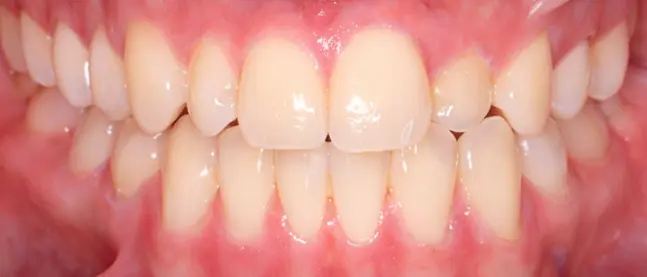
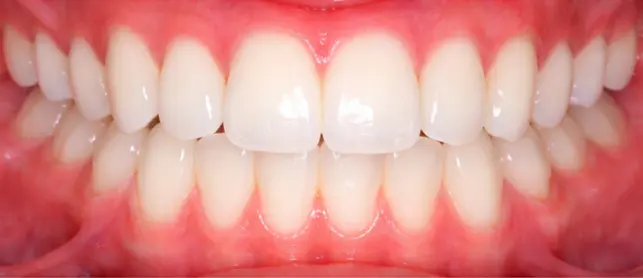
Crowding: Invisalign/Clear Aligners
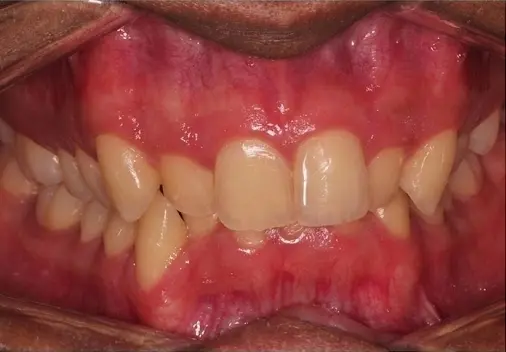
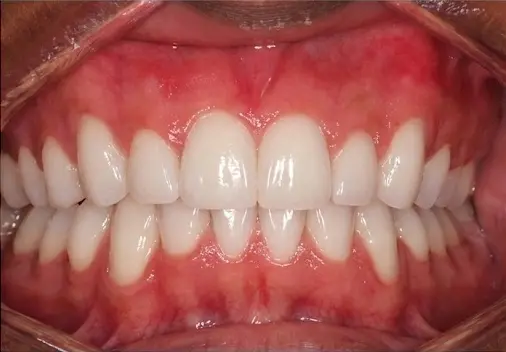
Deep Overbite: Braces with Bite-Pads
Frequently Asked Questions
What clear aligner brands does Limestone Hills Orthodontics offer?
Why does Limestone Hills Orthodontics recommend Angel over Invisalign for many adults?
What are angelButtons?
Why are Angel Aligners less expensive?
Can aligners fix my bite or just straighten teeth?
What if aligners aren’t working for my teeth?
The sooner a tracking issue is caught, the easier it is to correct with additional attachments, interproximal reduction, or a treatment plan update.